The most expensive tree is the one that dries out.
And right after it: the one that still stands but no longer cools.
Cities plant new trees while quietly losing the mature ones — and with them shade, cooling and other benefits that a new planting cannot replace for decades. Whether mature trees work next summer is largely decided this autumn.
A tree can look fine and still be switched off
When soil water runs short, a tree closes the pores in its leaves, cuts evaporation and stops growing. It saves water and survives. From the street it looks normal: green, with leaves. As a cooling device it is off. If the shortage lasts, it sheds leaf area; if it continues, parts of the water-conducting tissue are damaged for good and a branch or the whole tree can die — sometimes years after the stress.
A tree cools in two ways: shade, and evaporation from leaves. Evaporating one liter of water takes roughly 2.45 MJ of heat from the surroundings. A large tree with enough soil water can evaporate hundreds of liters on a summer day. The better question is not “is it alive?” but “is it working?”
How a tree cools — in four pictures
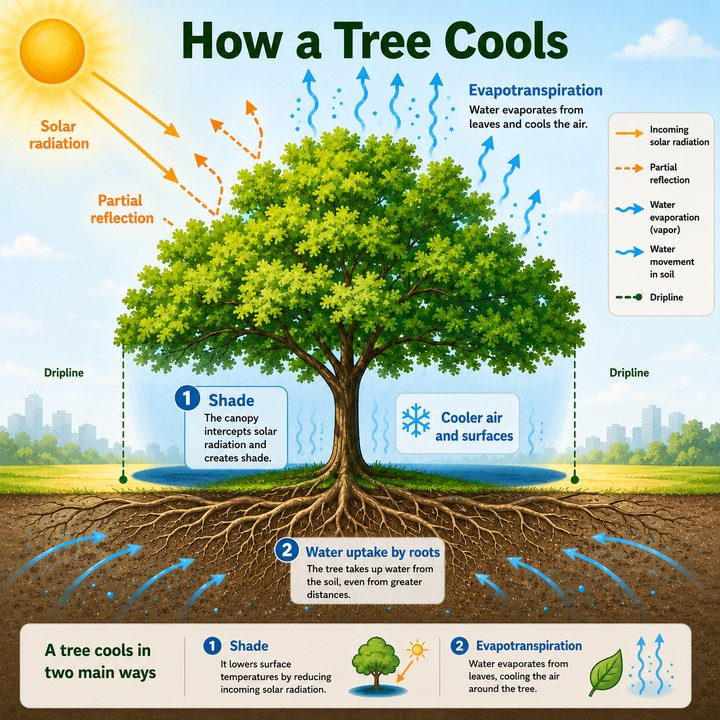
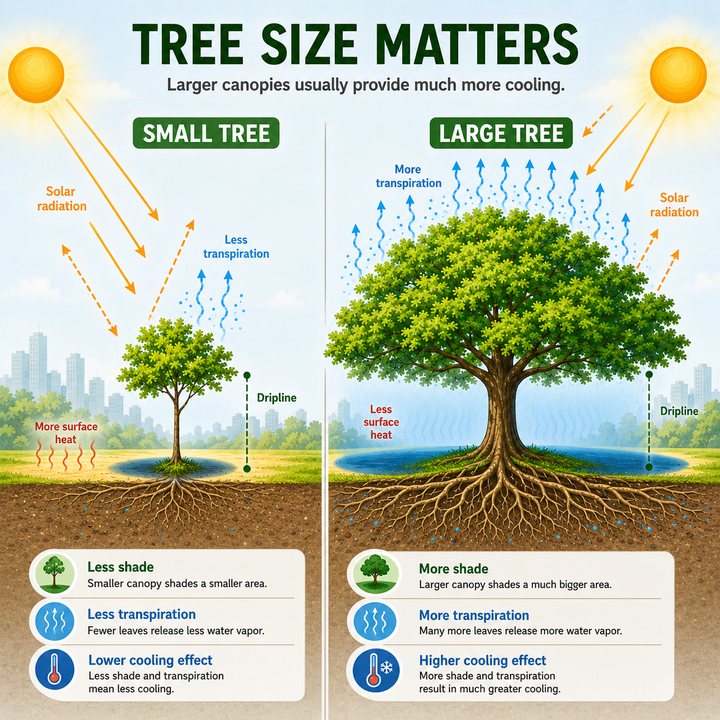
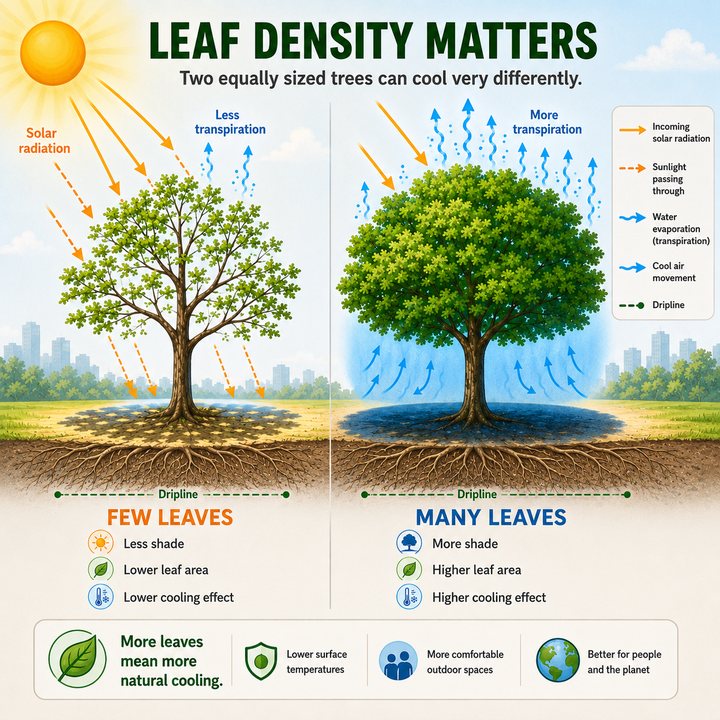
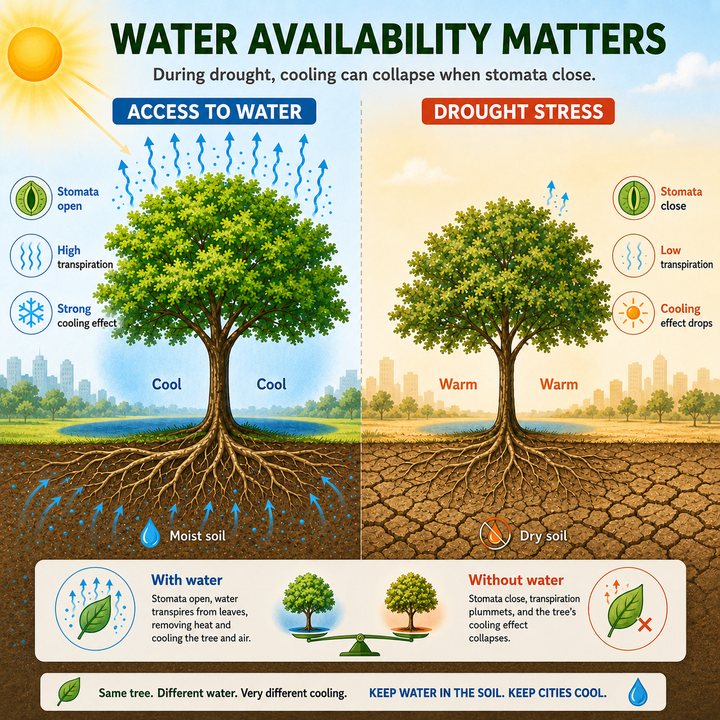
Illustrations for explanation, not measured data.
Why ordinary watering falls short for mature trees
- Volume. A mature tree’s dose is counted in hundreds to thousands of liters.
- Place. Active roots are not at the trunk; they are further out, under the edge of the crown and beyond.
- Speed. Water must soak in slowly and deeply. From a hose it runs off or evaporates in minutes; in paving it never reaches the roots.
Three questions to start with
- Which five trees would you least want to lose? Typically landmark trees on greens, squares and avenues.
- Which of them stand in paving, by parking, or near planned construction?
- Where will the water come from, and who will fill the bags? A tanker or hydrant and one person is enough.
Budgets for 2027 are being set now. If care of mature trees is not in them, next July’s drought response will come without money or equipment.