
Evidence — and how strong it is
We label every claim: documented use, observed results, independently measured, or model. A pilot exists to give your city its own numbers.
Documented use: Utrecht, Maliebaan
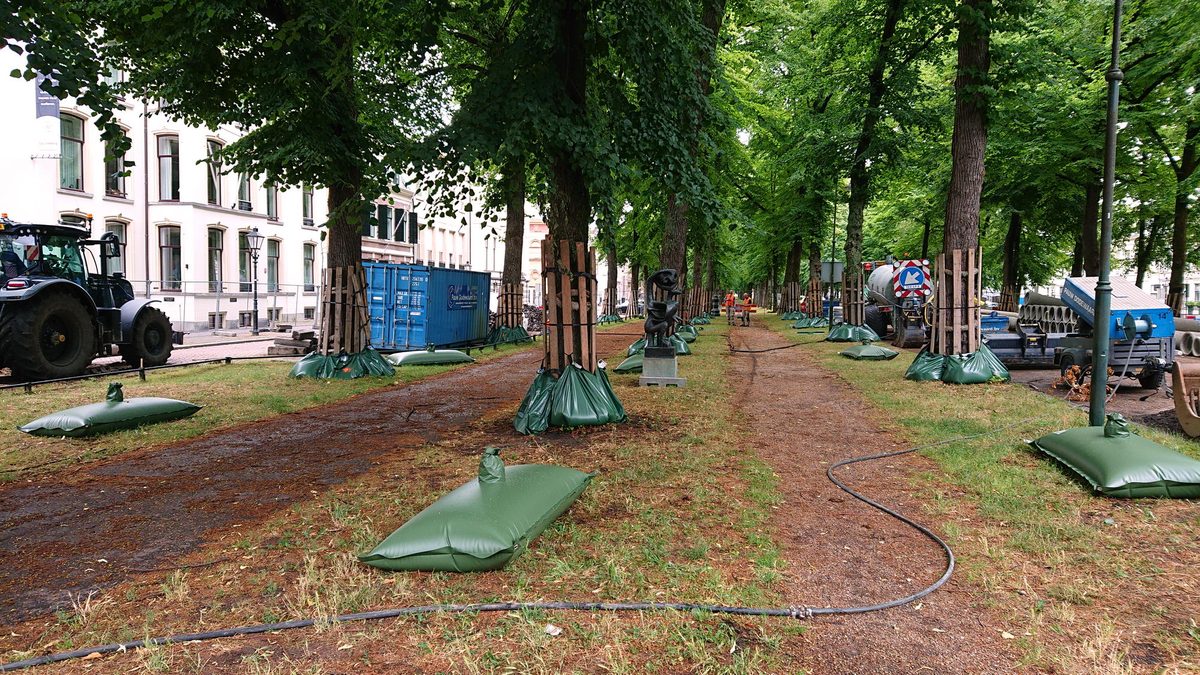
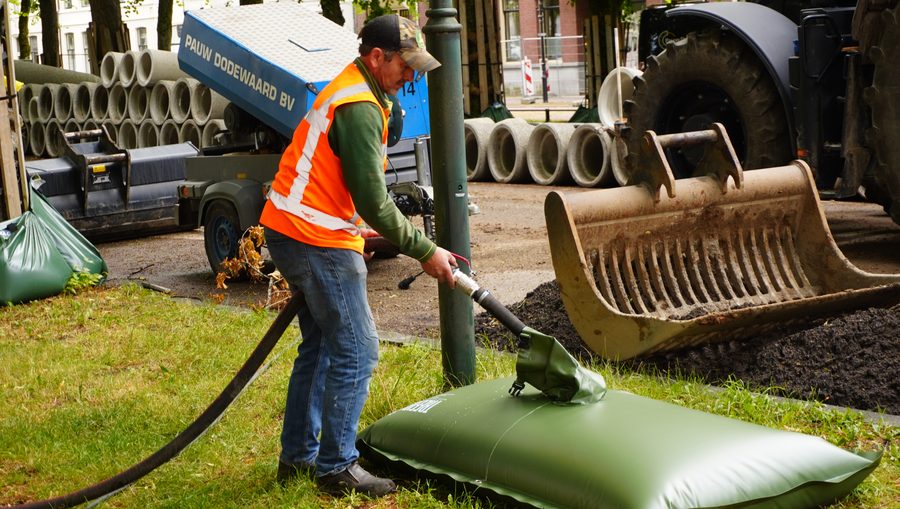
Maliebaan is a historic avenue of mature limes. During sewer reconstruction, groundwater was expected to fall by about two meters, putting fifty limes at risk. The contractor’s tree specialist prescribed 300 liters per tree per day — about 15,000 liters daily. Trunk bags, hoses and a temporary drip system could not deliver that on a live site; 50 TREEIB City bags (430 L) filled from a tanker could: about three minutes per bag, a full round of 50 trees in roughly 4.2 hours.
So far the evidence is practical: the method worked on a real construction site. At the time of the case study only qualitative observations (canopy density, wilting, soil surface) were available, no instrument data, and the trees’ condition was reported as stable.

“TREEIB® was the only practical way to supply the needed volume of water to mature trees without disrupting the construction site.”Jan Willem de Groot, director, Terra Nostra
Case study: “TREEIB Utrecht project article”, by Jan Willem de Groot, Terra Nostra; Komunální revue 2/2026.
Municipal users in Brno
Brno’s public greenery uses the system in its third season. Brno-Kníničky bought one City and two 1500 bags in September 2026 on a neighboring municipality’s recommendation.
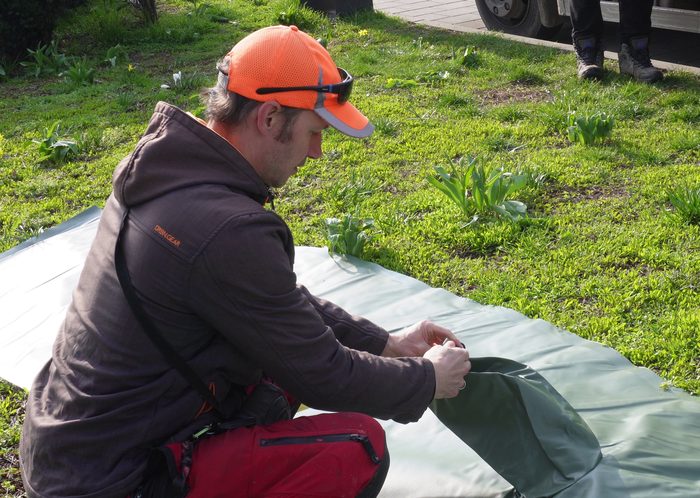
“We see a great benefit for mature trees in paved areas, where the needed volume of water practically cannot reach the roots by conventional means.”Ing. Tomáš Trnka, tree-avenue manager, Brno public greenery (translated from Czech)
Source: Komunální revue 2/2026, “Nejdražší strom je ten, který uschne”.
Observed: one group of spruces, before and after
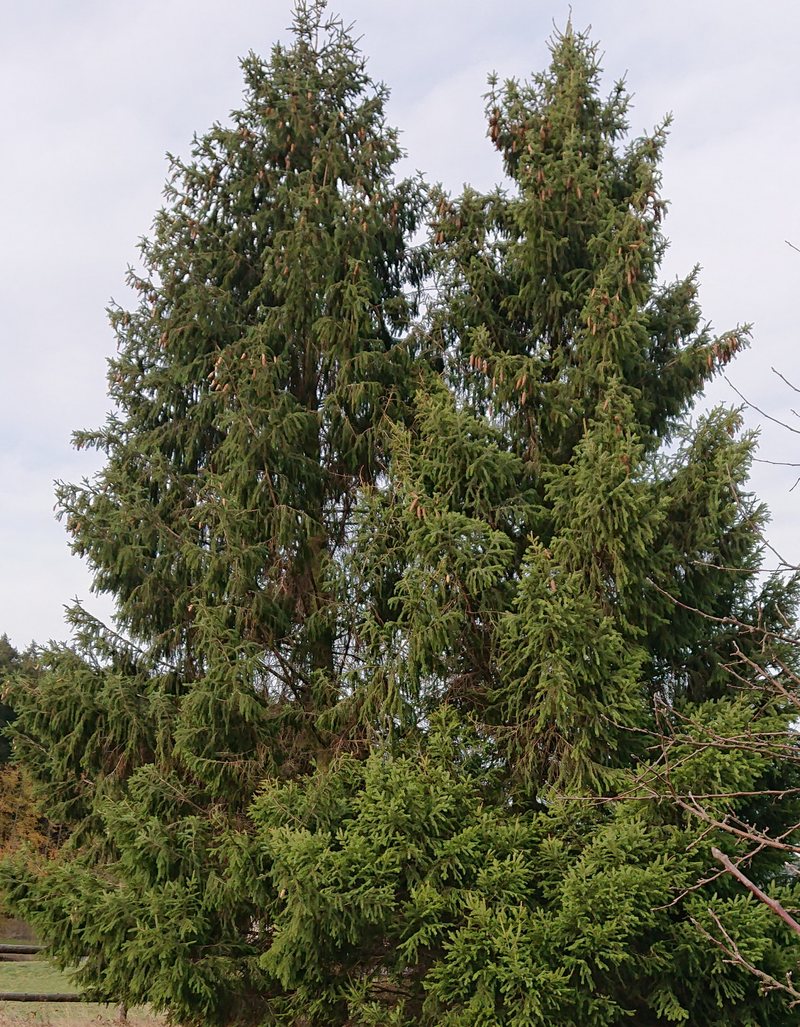
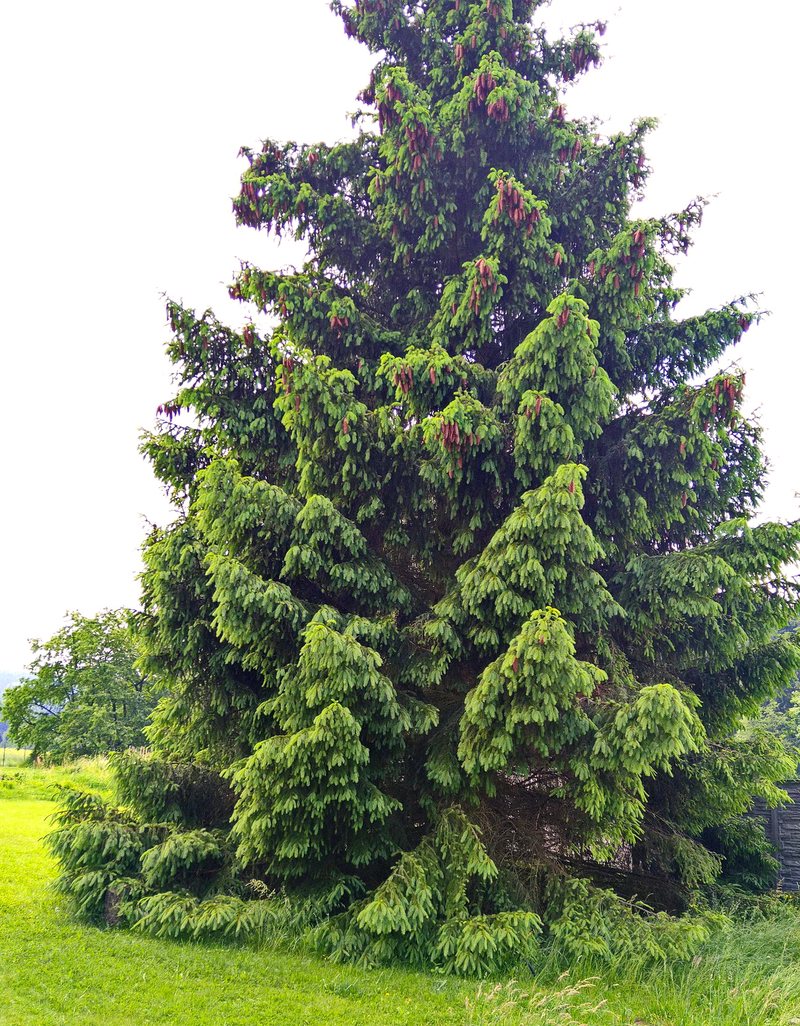
A single site, photographed by us; not a controlled trial.
Independently measured, with a caveat
Tree-ring analysis in 2023, carried out by an outside university team, found rapid growth in the watered spruce after the TREEIB regime began. The ring widths are third-party measurements. The conversion to stored carbon — roughly five times more than expected — is our estimate, prepared with carbon-forest expert Bob Leverett. It is a case study of single trees: it shows what happened at that site, not what will happen in your city. Details: treeib.com/results-of-large-tree-watering.
Model: one big oak vs. young trees
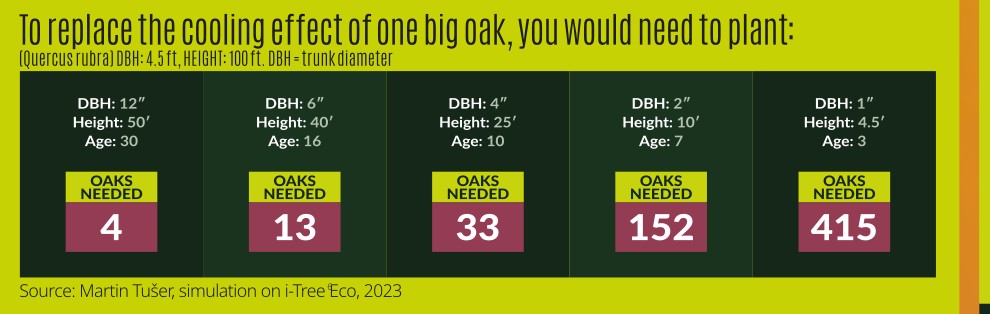
This table is an illustrative simulation (Martin Tušer, i-Tree Eco, 2023), not measured data. It shows why one large tree’s canopy is hard to replace.